Too Much Caffeine? Here Are the Best Remedies

Are you shaking again? Maybe you've experienced moments like this—those frantic mornings when you've had one or two more cups than usual, leaving you sweaty and tense. We at Coffee Circle have a few tips to help you manage this.
How much coffee is too much depends on you, because while some people can drink ten cups a day without feeling any side effects, others get jittery after just two cups.
This is due to your metabolism, but also to a natural tolerance threshold: The more coffee you drink, the more you can handle without experiencing side effects like nervousness, sweating, or a racing heartbeat.
The French writer Balzac reportedly drank nearly 50 cups of coffee every day while pursuing his calling. And he was one of the most productive authors not only of his time but of all time: he often wrote for 15 hours a day. He left behind a body of work comprising 90 novels and countless short stories and essays.
But what if you’re not Balzac and you’ve had a little more coffee than planned? Caffeine stimulates the production of adrenaline. Your blood pressure rises temporarily. Adenosine receptors are blocked, which makes you feel awake.
That’s why you’re now nervous, sweaty, and may have a racing heart. First of all: Don’t worry—it’s harmless to your health. Nothing will happen to you. But there are ways and means to counteract it.

Sports
Adrenaline is your friend. This hormone helps you flee quickly when you’re threatened. It puts you on high alert. However, elevated adrenaline levels can also be a nuisance in certain situations, as they make you nervous and anxious. Cardio exercises are particularly effective, but other sports are too, since endurance training reduces stress hormones like adrenaline and cortisol. It also releases endorphins—the “feel-good” hormones.

Specialty Coffee for a better tomorrow
Meditation
Much like exercise, meditation and breathing exercises—as well as progressive muscle relaxation—can help you slow down. When you’re stressed and/or nervous, you unconsciously tense your muscles. This, in turn, increases the release of adrenaline. By learning to recognize this behavior, you can better control it and learn to relax. There are various methods for managing your tension—both mentally and physically—but not every method works for everyone. There are different types of meditation, breathing exercises, and muscle relaxation techniques that might work for you. Maybe even guided imagery videos on YouTube can help. Find out what feels best for you.

Nutrition
Certain ingredients can slow down the release of caffeine into your bloodstream. Fiber is particularly effective here, as it prevents caffeine from being absorbed by the intestines as quickly. If you drink your coffee in the morning on an empty stomach, you’ll experience a faster energy boost than if you drink it during or shortly after breakfast. Whole grains, beans, lentils, starchy vegetables, and nuts are good options to help prevent this.
Regardless of your coffee consumption, it’s always important to stay hydrated throughout the day—that is, to drink plenty of water. Dehydration can exacerbate some of the symptoms of increased caffeine intake. However, there is no evidence that increased water intake can counteract existing side effects such as nervousness.


Decaf: Why it exists and how to prepare it
Learn more
The perfect summer drink: 5 Cold Brews in comparison
Check them out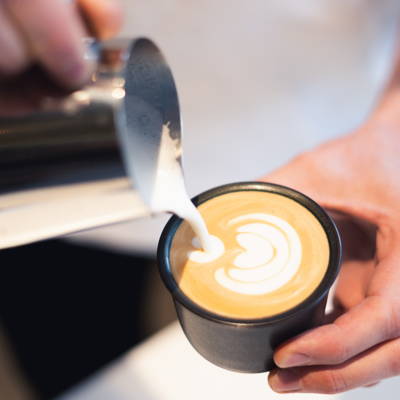
Latte Art: Pouring perfectly shaped hearts into your cappuccino
Learn Latte Art
Be the first to find out the latest news with the newsletter
Sign up nowSpeaking of
We definitely don’t recommend that you start smoking, because smoking is harmful and uncool. However, nicotine does have properties that can mitigate the side effects of caffeine consumption—and in the interest of honesty, this should be mentioned here. Nicotine causes your body to metabolize caffeine twice as fast as it normally would. In other words, caffeine has a shorter half-life. A smoker therefore has to drink more coffee than a nonsmoker to feel the same buzz.
Alcohol, on the other hand, as the study cited above also found, has no effect whatsoever on the effects of caffeine.